Mr. Kurumizawa’s twenty-day disappearance
Blind Willow, Sleeping WomanMr. Kurumizawa’s twenty-day disappearance ends with his discovery on a waiting-room bench in Sendai Station, but not with an explanation: he remembers neither the journey nor the days he was gone. His return resolves the search while preserving its central blank, turning an ordinary absence into a mystery measured by what cannot be recalled.
Discovery in Sendai
The news comes from Mr. Kurumizawa’s wife, who calls the volunteer investigator after police locate her husband around noon the previous day. A railway employee had shaken him awake on a bench in the station waiting room. He had no money or identification; eventually, however, he remembered his name, address, and telephone number. His wife flies to Sendai and confirms that the man is Mr. Kurumizawa.
The location sharpens rather than resolves the puzzle. Sendai lies far from the apartment and family routine he left behind, yet he has no idea how he got there. He cannot say how he traveled without money or how he ate during the twenty days. His first recovered facts establish who he is, not what happened to him.
The Lost Interval
Mr. Kurumizawa is found wearing the same clothes he had on when he left the apartment. He has grown a beard, lost more than twenty pounds, and misplaced his glasses. These visible changes register the duration and physical cost of the absence, while offering no account of its circumstances.
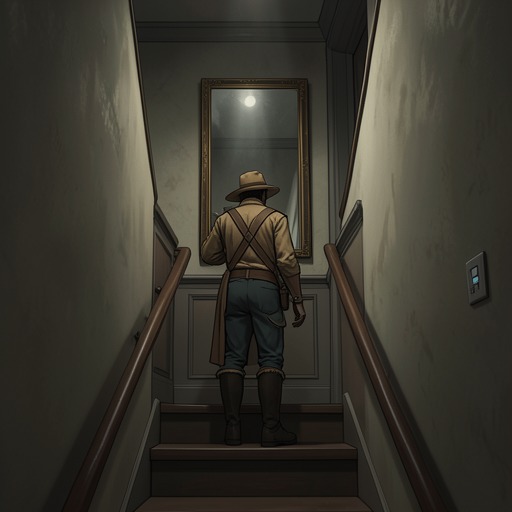
At the hospital in Sendai, doctors perform a CAT scan, X-rays, and neurological examinations. His wife reports that his mind otherwise seems entirely sound and that nothing appears physically wrong, but his memory of the twenty days is gone. He remembers leaving his mother’s home and walking up the stairs; after that, the sequence breaks off. The gap is therefore not a general inability to identify himself: it is a sharply bounded loss of the period that would explain his disappearance.
Return Without Explanation
Once her husband has been found, his wife tells the investigator that the search can stop. They expect to return to Tokyo the next day. The practical emergency has an ending—Mr. Kurumizawa is alive, located, and reunited with his wife—but the account supplies no recovered memory or explanation to close the case.
After the call, the investigator slowly turns a new pencil over a blank memo pad and records the report’s particulars: Sendai Station, Friday around noon, the telephone call, the lost weight, the same clothes, the missing glasses, and the vanished twenty days. He writes the duration again, isolating it as the fact that remains most difficult to assimilate. His attention then returns to the click of the wife’s high heels on the stairway and to the three-sided world of Mr. Kurumizawa’s mother, wife, and work at Merrill Lynch. The disappearance briefly opens a void in that familiar arrangement; the return restores the person to it without revealing what took place beyond its edges.
Narrative Significance
The episode makes physical traces legible while withholding the event they might ordinarily help reconstruct. Clothes, beard, weight loss, missing glasses, and the station bench attest that the absence was real, but none explains its route or its daily conditions. Even the medical examinations clarify the limits of the mystery rather than its cause: Mr. Kurumizawa appears physically well and mentally intact apart from the lost interval.
The story’s resolution is consequently divided. The search ends because Mr. Kurumizawa has been found, while the disappearance itself remains unfilled by memory. The investigator’s written list gives the missing time a precise outline, and his repeated note of the twenty lost days underscores the difference between knowing that an interval occurred and knowing what happened within it.